Live or Die: Survival Pro
- 4.3
- Rating
- 10.00M
- Installs
- $0.99
- Price

 Analysis by App-foxy
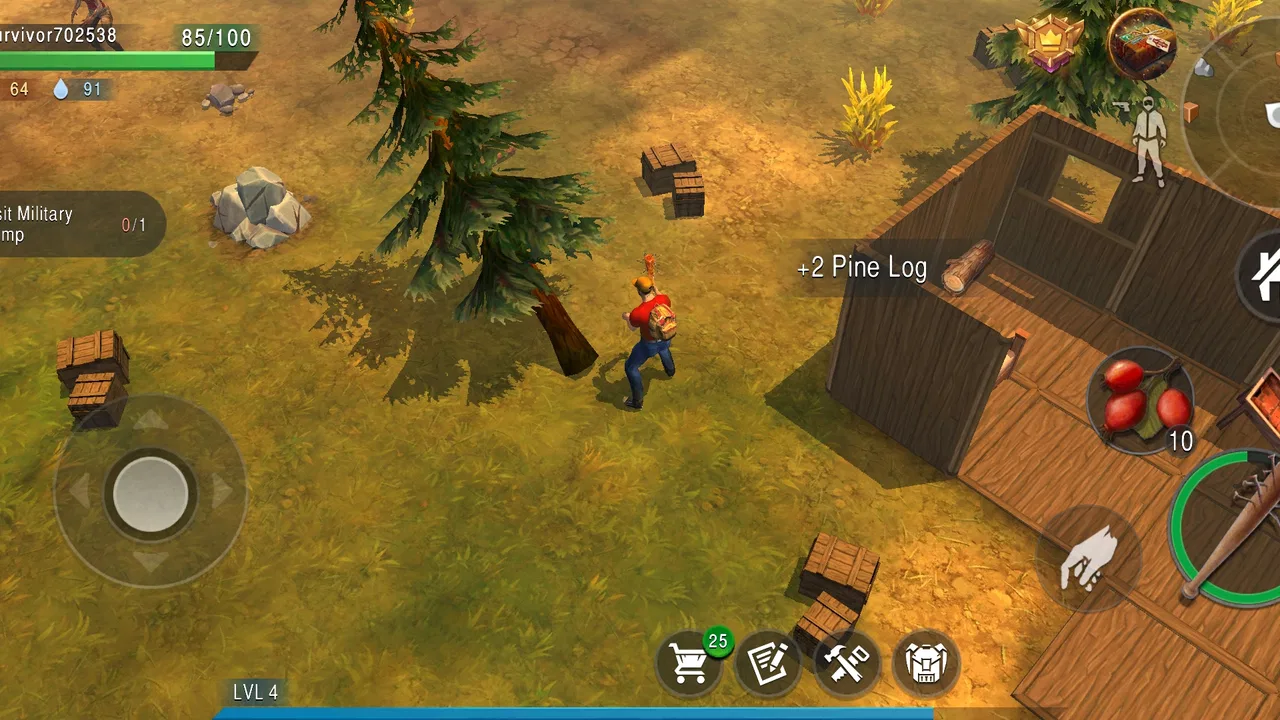
Live or Die: Survival Pro is the kind of Android adventure game I would hand to someone who enjoys making difficult choices with limited supplies. Its setting is a zombie apocalypse, but the appeal is less about constant action and more about trying to stay prepared when every resource matters. I found it most interesting during short, focused sessions: checking what I had, deciding what to risk, and then dealing with the consequences of a poor choice.
Developed by Not Found Games, it presents survival as a daily problem rather than a simple march from one fight to the next. The game is aimed at Teen players, and that matters in a shared household because the atmosphere and subject matter are not designed for young children. The basic idea is easy to understand, but the pressure comes from balancing exploration, supplies, equipment, and safety. If you like adventure games where progress depends on planning, this has a solid foundation. If you want a relaxed game that can be played without much attention, I would look elsewhere.
How it fits into a shared household
I can imagine this game being used on a shared tablet or a family Android phone, especially when one person wants something more involved than a quick puzzle. A realistic situation would be a teenager playing after school, stopping before dinner, and leaving the device available for someone else. The game suits that pattern because its survival loop naturally breaks into manageable decisions rather than requiring one uninterrupted marathon session.
You May Also Like

 Pandora - Music & Podcasts
Pandora’s Music Is Easy to Start, but Harder to Recover
Pandora’s strength is its low-effort path from a seed to a station. Its weak spot is how much confidence it asks you to place in connection, setup, and quiet recovery.

 AccuWeather: Weather Radar
AccuWeather Review: A Quick, Clear Forecast for Everyday Decisions
For everyday plans, the best forecast is the one you can understand quickly. AccuWeather makes rain timing, radar, and local conditions easy to act on, with a few trade-offs.

 Hill Climb Racing
Why Hill Climb Racing Still Turns Crashes Into One More Run
A tiny car, a bumpy hill and one more upgrade: Hill Climb Racing keeps resurfacing because its simple chaos makes every near-miss feel personal.

 AliExpress - Shopping App
AliExpress Makes Global Shopping Feel Personal, but Shoppers Bear the Risk
AliExpress turns a global marketplace into a pocket-sized discovery engine. Its reach is useful, its shopping loop compelling, and its trade-offs easy to miss.

 Lords Mobile: Kingdom Wars
Lords Mobile Is a Kingdom-Building Routine, Not a Quick Match
A case-by-case verdict on the building, battles, device demands, and social commitments that make Lords Mobile rewarding for some players and exhausting for others.

 PDF Scanner app - TapScanner
TapScanner Makes Paperwork Easier to Capture, Check, and Share
TapScanner makes scanning with a phone feel less like a rescue operation and more like a dependable step in getting work done. Its capture tools are useful, though not flawless.
More From Our News Desk
View All News


That said, I would not treat it as a casual all-ages title simply because it is available on a mobile device. The zombie setting gives it a darker tone, and the Teen content rating is a useful boundary for households deciding who should play. Parents or other device owners should make that decision based on the individual player’s comfort with survival and horror themes, rather than assuming that a cartoon-like mobile presentation makes the subject harmless.
On a shared device, the most important practical question is not whether two people can enjoy the same game; it is whether they can keep their progress and purchases clearly separated. I would avoid casually switching between players without first checking how the game handles its active progress. I also would not let a younger household member make purchase decisions on an account used by someone else. The game includes in-app items ranging from $0.99 to $129.99 each, so shared-device habits deserve attention even when the initial download or purchase seems inexpensive.
For a single player, the experience is easier to manage. I could build a routine around one survivor, one inventory, and one set of decisions. For a household, I would establish a simple rule: one person plays at a time, and nobody spends money or changes the active game state without asking. That is not a special feature of the game; it is sensible device etiquette, and it prevents avoidable arguments over progress.
What to settle before installing
The game costs $0.99, which makes the entry decision fairly straightforward for someone who already knows they enjoy survival adventures. I see that price as a useful filter: it signals that this is not being presented solely as a free distraction. However, the presence of optional purchases means the initial cost should not be confused with a complete household spending limit. I would discuss that distinction before putting it on a shared device.
Compatibility is also worth checking before planning a household gaming session. It requires Android 7.0 or later, so older phones and tablets may not be suitable. On a newer device, I would still leave enough storage and battery for normal use rather than assuming a game can run comfortably on any phone that technically meets the operating-system requirement. A shared tablet used for schoolwork, calls, or navigation should not be treated as a dedicated game machine.
The current version is 0.5.91. I would check the installed version when troubleshooting, particularly if one household member reports a problem that another person cannot reproduce. Keeping the game updated through the normal device process is sensible, but I would avoid promising that an update will solve every issue. Mobile games can behave differently across devices, and a shared-device setup adds another layer of confusion when several people change settings or accounts.
Before a first session, I would also decide whether the game belongs on a personal device or a communal one. A personal phone offers a clearer boundary around progress and spending. A shared tablet can make the game more social, but it also makes it easier to open the wrong profile, interrupt another player, or assume that a purchase belongs to everyone. The game itself may be about survival, yet the household challenge is really about keeping ownership and expectations clear.
Coordinating play without turning it into a chore
The best way I found to approach this title is to treat each session as a small planning meeting with myself. Before heading into a dangerous situation, I would look at available supplies and ask whether the possible reward justified the risk. That habit is more valuable than rushing toward every visible objective. In a shared household, two players could use the same principle by agreeing on a goal before taking over the device: explore, improve equipment, conserve supplies, or simply continue the current run.
This kind of coordination works better than giving vague instructions such as “don’t waste anything.” A player can instead leave a short note verbally or in a household message: what they were trying to do, what resources they were protecting, and what should not be spent casually. The point is not to create an elaborate family management system. It is to make the next person understand the state of the run before making a decision that cannot easily be undone.
One useful approach is to divide sessions by purpose. A shorter session can focus on organizing supplies and preparing for the next outing. A longer session can be reserved for exploration or riskier progress. This reduces the temptation to begin a dangerous activity just before handing the device to someone else. It also gives younger or less experienced players a safer role: they can learn the inventory and preparation side before taking on the most demanding decisions.
I would be careful with advice from another player in the household. Survival games often encourage confident recommendations, but the right choice depends on the current state of the run. A strategy that worked after collecting plenty of supplies may be poor when equipment is damaged or the inventory is nearly empty. The useful conversation is not “always do this”; it is “what are you carrying, what are you trying to achieve, and what can you afford to lose?”
That is one of the game’s stronger shared-use qualities. It can create a natural conversation about risk and planning without requiring competitive play. One person can observe while another plays, then discuss whether the reward was worth the danger. Still, I would not assume that every household will enjoy this. Some players dislike anyone watching over their shoulder, and a survival game can become frustrating when a family member criticizes every decision.
Age, trust, and spending boundaries
The Teen rating should be treated as an actual part of the buying decision, not a label to ignore. The zombie-apocalypse setting is central to the experience, so I would choose it for players who are comfortable with that theme. A child who enjoys colorful adventure games may still find a survival scenario uncomfortable, especially when the game emphasizes danger and scarcity. I would let the player see the general tone before deciding whether it belongs on a shared family device.
Trust matters just as much as age. A responsible teenager may be perfectly capable of managing a survival inventory but still need a clear rule about purchases. Because individual in-app items can reach $129.99, I would not rely on verbal reminders alone when the device is used by several people. The safest household routine is to keep purchasing under the device owner’s control and require permission before any transaction. That protects both the family budget and the player, who should not feel pressured to spend in order to keep up with a particular style of play.
I also think it is important to separate game skill from spending. A player who struggles to progress should not automatically be encouraged to buy an item. First, I would ask whether the problem is poor preparation, an overloaded inventory, or taking unnecessary risks. Survival games often make patience and planning more effective than immediate spending, and learning that distinction is part of the enjoyment. If someone in the household dislikes resource pressure, optional purchases may make the experience feel more complicated rather than more fun.
For account boundaries, I would use the device’s existing user and purchase safeguards rather than assuming the game will organize a family’s access automatically. I would not promise separate household profiles, family controls, or a special guest mode. Instead, I would keep the game associated with the intended player’s account where possible and avoid handing the device around during a purchase screen. That approach is less convenient than treating the app as a communal toy, but it is much clearer.
Where the survival design works, and where it may frustrate
My favorite part is the way the game turns ordinary preparation into meaningful progress. In many mobile adventure games, the obvious path is to keep moving forward until the next reward appears. Here, I found more satisfaction in pausing to consider what I could safely attempt. That makes a short session feel useful even when I do not reach a major milestone. Sorting out the next move can be as engaging as the destination.
The trade-off is that survival pressure can feel restrictive. Players who prefer immediate action may see preparation as a delay, while players who enjoy careful planning may appreciate the tension. I would recommend it to someone who likes adjusting a plan after an unexpected setback. I would skip it for a player who wants a straightforward story adventure with generous supplies and little consequence for mistakes.
Compared with a typical action-focused zombie game, this title asks me to think more about the condition of a run than about constant combat. Compared with a relaxed crafting game, it offers a harsher mood and less room to ignore danger. It sits between those styles: approachable enough for mobile play, but demanding enough that careless decisions can spoil the next part of a session. That middle ground is its identity, although it will not satisfy someone looking for either pure action or a peaceful building experience.
One practical tip is to avoid spending every useful item simply because it is available. I get better results when I treat supplies as part of a plan rather than as a reward to consume immediately. Another is to use low-pressure moments to learn the interface and inventory flow instead of waiting until a dangerous situation. A third is to stop before frustration takes over. When I continue only because I want to recover from a mistake, I usually make another rushed decision. A short break can protect the run better than stubbornly playing on.
I would also recommend deciding what success means for each session. If the goal is exploration, do not judge the session only by how much equipment was gained. If the goal is preparation, returning safely may be a better outcome than chasing a tempting reward. This mindset is especially helpful when several people share the game, because it prevents one player from undoing another person’s careful work simply to create a more dramatic moment.
Who should choose it and who should pass
With an average rating of 4.3 from around 102 thousand ratings and more than 10 million installs, the game has clearly reached a broad mobile audience. Those figures do not guarantee that it will match every player, but they do suggest that its survival-adventure format has found a substantial following. I would consider it a reasonable choice for someone who wants a zombie-themed game with planning, resource pressure, and progress that feels earned.
I would particularly recommend it to an older teenager or adult who enjoys checking supplies, making cautious decisions, and returning to a game repeatedly. It can also work for a household that likes discussing strategy, provided everyone respects the active player’s progress and the spending rules. The $0.99 entry price makes it easier to try than a full-priced console game, while the optional purchase range means the household should still set boundaries from the beginning.
I would pass on it for a young child, a player sensitive to zombie themes, or anyone who dislikes losing time because of a bad decision. I would also choose a different adventure game for a person who wants a strong linear story, instant action, or a completely free experience without purchase pressure. The game’s appeal depends on accepting its survival rhythm; removing that tension would remove much of what makes it distinctive.
My household verdict
After spending time with it, I see Live or Die: Survival Pro as a focused survival adventure rather than a disposable zombie distraction. I like that it rewards preparation and makes a player think before acting. Its weaknesses are equally clear: the darker Teen context limits its audience, shared-device play requires care, and the optional purchase range makes household spending rules important.
For a personal Android device, I think it is an easy recommendation for the right player, especially someone who enjoys turning a small amount of mobile time into a careful tactical session. For a shared family device, I would install it only after agreeing on who plays, how progress is handled, and who can approve purchases. Those boundaries make the experience calmer and prevent the game from becoming a source of conflict.
Not Found Games has built something that works best when I treat survival as a series of deliberate choices rather than a race. The game is worth considering if that sounds appealing. My main advice is to choose it for the planning, not merely for the zombies: that is where its strongest moments are, and it is also the clearest way to decide whether this particular adventure belongs in your household.
FAQs for Live or Die: Survival Pro
01What is Live or Die: Survival Pro about?
Live or Die: Survival Pro is a post-apocalyptic survival game focused on exploration, crafting, base building, and combat. You play as one of the few people left alive after a zombie outbreak, searching abandoned locations for food, water, weapons, tools, and materials. Progress depends on managing resources carefully, improving your shelter, and surviving increasingly dangerous areas.
02Is Live or Die: Survival Pro free to download and play?
The game can generally be downloaded for free, but it may include optional in-app purchases. These purchases can provide resources, equipment, upgrades, or other conveniences, although they are not necessarily required to experience the main survival gameplay. Players should also check the store listing for the latest information about advertisements, paid items, and any platform-specific restrictions.
03Does the game require an internet connection?
An internet connection may be needed for certain features, including downloading game data, synchronizing progress, receiving updates, displaying advertisements, or accessing online events and services. Some survival activities may work offline, but availability can vary by version and device. For the most reliable experience, especially after installing an update, it is recommended to launch the game while connected to the internet.
04What can players do in Live or Die: Survival Pro?
Players can gather materials, craft weapons and equipment, build and upgrade a personal base, explore dangerous locations, fight zombies, and search for useful supplies. The game also includes survival management, since health, hunger, thirst, durability, and inventory space can affect your progress. Careful preparation is important before entering areas with stronger enemies or limited escape options.
05Is Live or Die: Survival Pro suitable for casual players?
The game can be enjoyed casually, but it is designed around gradual progression and repeated resource management. New players may need time to understand crafting recipes, inventory limits, combat controls, and the risks of exploring unfamiliar zones. The survival mechanics can feel demanding if you dislike collecting materials or waiting for upgrades, while fans of post-apocalyptic games may appreciate its persistent progression and challenging atmosphere.
Pros
- Large open world with varied locations to explore and loot.
- Crafting system offers plenty of weapons
- tools
- and survival equipment.
- Base building provides useful protection and storage options.
- Regular missions and events add goals beyond basic resource gathering.
- Offline play is available for many core survival activities.
Cons
- Energy limits can slow exploration and make progress feel repetitive.
- Resource gathering becomes grind-heavy during later stages.
- Some valuable items and upgrades are tied to in-app purchases.
- Enemy difficulty can spike unexpectedly in certain areas.
- The interface may feel crowded on smaller phone screens.

Live or Die: Survival Pro
Gallery